
Lumps, Scars, and Cycles: A Patient’s Guide to Abdominal Wall Endometrioma”
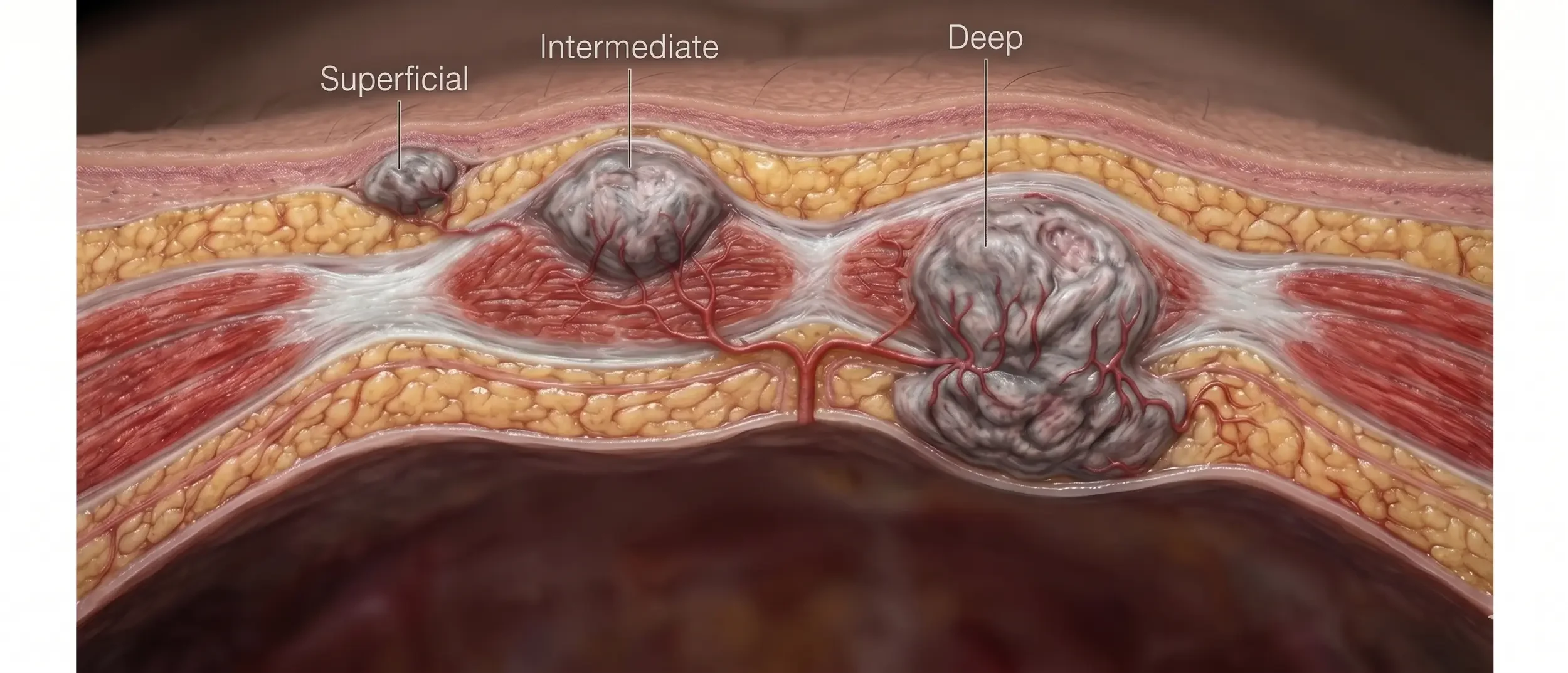
Abdominal Wall endometrioma
Abdominal wall endometrioma is a rare but important condition that can affect women who have undergone abdominal surgeries, particularly cesarean sections. Understanding its causes, risk factors, and treatment options is essential for timely diagnosis and care.
What is an Abdominal Wall Endometrioma?
An endometrioma is a mass formed by endometrial tissue (the tissue that lines the uterus) growing outside the uterus. When this tissue develops in the abdominal wall, it can cause:
Pain, especially during menstruation
Swelling or a palpable lump
Discomfort at the site of previous surgical scars
Unlike other lumps, abdominal wall endometriomas are hormonally responsive, meaning their size and pain may fluctuate with the menstrual cycle.
Prevalence
Abdominal wall endometrioma is relatively rare:
Occurs in 0.03–1% of women after cesarean sections or abdominal surgeries
Most cases are reported in women aged 25–40 years
Often underdiagnosed due to its similarity to hernias or lipomas
Risk Factors
Several factors increase the likelihood of developing an abdominal wall endometrioma:
Previous cesarean section or gynecological surgery
History of pelvic endometriosis
Scar tissue formation after abdominal surgery
Hormonal fluctuations, particularly in reproductive-age women
Common Locations
Abdominal wall endometriomas usually appear near:
Cesarean section scars
Umbilicus (belly button)
Other surgical incision sites
Rarely, they may develop in the lower abdomen or groin region.
Classifications
Abdominal wall endometriomas can be classified based on size and depth:
Superficial endometriomas – confined to subcutaneous tissue
Deep-seated endometriomas – involving rectus muscle or fascia
Complex endometriomas – larger, irregular masses sometimes invading multiple layers
Accurate classification helps guide treatment decisions.
Diagnosis
Diagnosis is usually confirmed with imaging and clinical evaluation:
Ultrasound: First-line imaging; shows a solid or cystic mass
MRI: Useful for larger or deep-seated lesions
Fine-needle aspiration: Occasionally used, but risk of spreading tissue
Treatment Options
Treatment focuses on pain relief and lesion removal:
1. Surgical Excision
Most common and effective treatment
Complete removal of the mass including surrounding tissue to prevent recurrence
Sometimes requires mesh repair if abdominal wall is weakened
2. Ultrasound-Guided Cryoablation
Minimally invasive alternative
Freezes the endometrioma under ultrasound guidance
Less recovery time and scarring compared to surgery
Suitable for small to moderate-sized lesions
3. Medical Management (Limited Role)
Hormonal therapy can temporarily reduce symptoms
Not curative, as it doesn’t remove the lesion
Recovery and Prognosis
Surgical excision or cryoablation usually leads to excellent outcomes
Recurrence is uncommon if the lesion is completely removed
Pain often resolves after treatment
Key Takeaways
Abdominal wall endometrioma is rare but treatable
Risk increases with previous abdominal surgeries
Early detection improves outcomes
Surgical excision and ultrasound-guided cryoablation are effective treatments