
"Out With It — Why Excision Beats Ablation and Always Has"
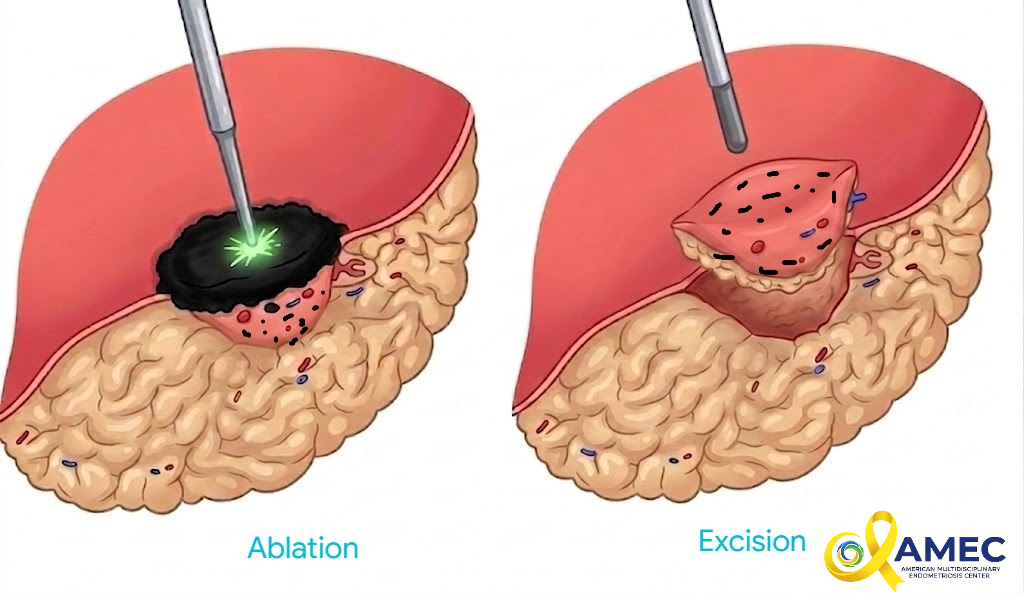
Two Technique and often Two Levels of Surgical Skills
These are the two main surgical techniques used to treat endometriosis, and understanding the difference is critical because they affect outcomes, recurrence, and pain relief.
1. Ablation (Burning the Lesions)
What it is:
The surgeon destroys the surface of endometriosis lesions using heat, laser, or electrical energy.
How it works:
Lesions are burned or coagulated, but not physically removed.
Advantages:
Faster and technically easier
Shorter operative time
May be helpful for superficial (surface-level) disease
Disadvantages / Limitations:
Often does not treat the full depth of the lesion
Higher recurrence rates
Less effective for deep infiltrating endometriosis
May leave active disease beneath the surface
2. Excision (Cutting Out the Lesions)
What it is:
The surgeon cuts out the entire endometriosis lesion, including its depth and surrounding affected tissue.
How it works:
Lesions are completely removed, often down to healthy tissue margins.
Advantages:
More complete removal of disease
Lower recurrence rates
More effective for deep and complex disease
Better outcomes for pain relief and fertility (in many cases)
Disadvantages / Limitations:
Technically more demanding
Requires advanced surgical expertise
Longer operative time
Higher risk of complications in complex cases (especially involving bowel, bladder, or ureters)
3. Key Difference (Simple Concept)
Ablation = treats the surface
Excision = removes the root of the disease
💡 Why This Matters
Endometriosis often extends below the visible surface, similar to an iceberg.
Ablation may treat only what is seen
Excision removes the entire lesion, including deeper components
This is why excision is generally preferred, especially in:
Deep infiltrating endometriosis
Recurrent symptoms after prior surgery
Cases involving bowel, bladder, or severe adhesions
🔑 Takeaway
Ablation can be useful in selected mild cases but carries a higher risk of persistence or recurrence.
Excision is widely considered the more definitive surgical approach, particularly when performed by an experienced endometriosis specialist.
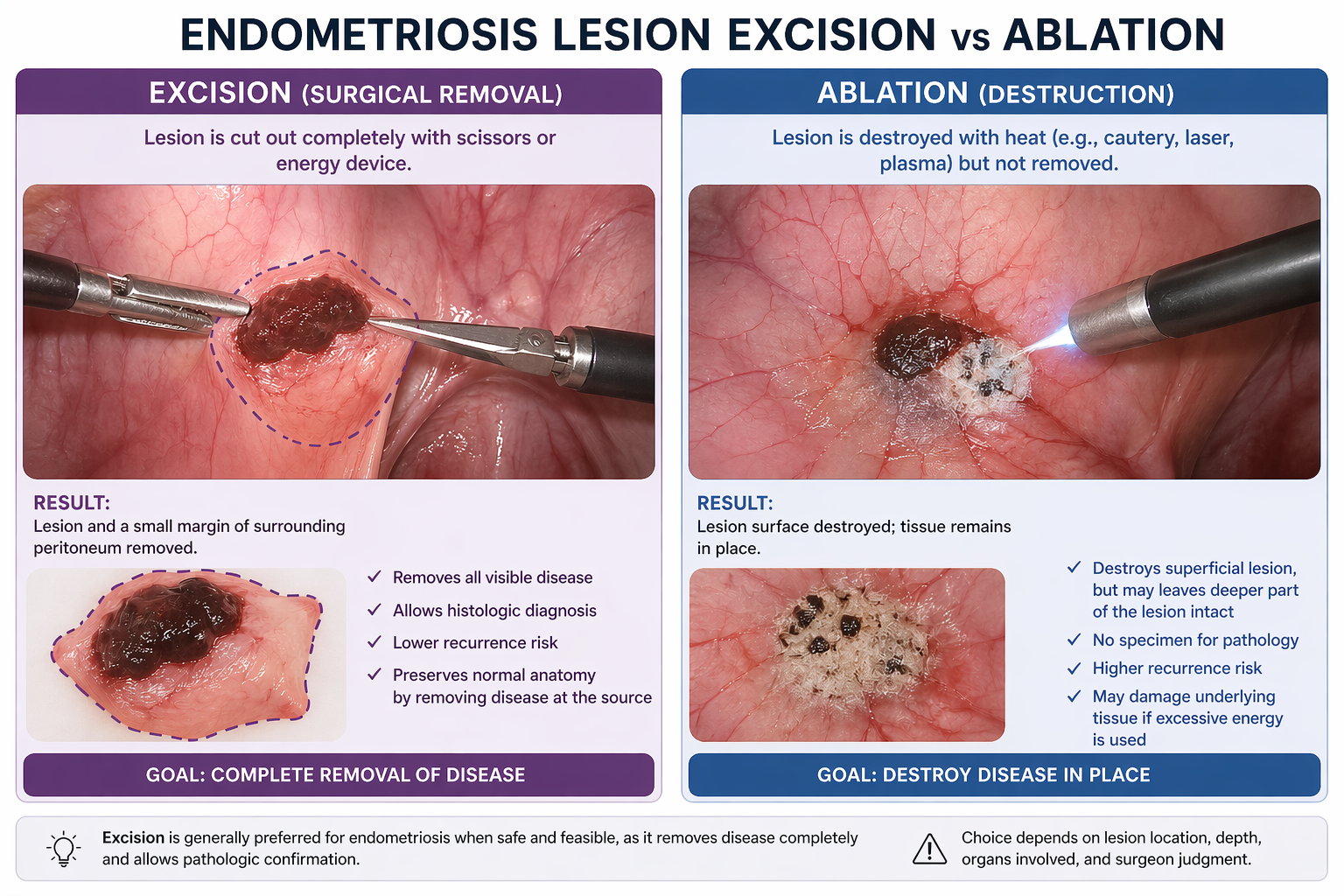
Comparison Of techniques used to manage endometriosis lesions.
"In endometriosis surgery, the evidence may still be catching up — but the experts have already arrived. And where every skilled hand that has operated on this disease points in the same direction, that consensus deserves to be heard as loudly as any randomised controlled trial."
Salman Okour,MD
"When every surgeon who has dedicated their career to endometriosis agrees that excision is superior, the absence of a perfect randomised trial does not create genuine doubt — it simply reveals how far the research has yet to travel to catch up with what experienced hands already know."
Salman Okour,MD