
"Endometriosis and Fertility — The conversation your doctor should be having with you"
How does Endometriosis Affect Fertility ?
Endometriosis can have a significant impact on fertility, but the effect varies widely depending on disease severity, location, and individual factors. Here’s a detailed, clear explanation:
1. How Endometriosis Affects Fertility
A. Anatomical and Structural Effects
Ovarian endometriomas (cysts)
Can damage ovarian tissue and reduce ovarian reserve (number of eggs available)
Surgery to remove cysts may also reduce healthy ovarian tissue if not done carefully
Pelvic adhesions (scar tissue)
Can distort the uterus, fallopian tubes, and ovaries
Interferes with egg release, pick-up by the fallopian tube, and fertilization
Tubal blockage
Severe disease can block fallopian tubes, preventing sperm from reaching the egg or embryo from reaching the uterus
B. Inflammatory Effects
Endometriosis causes chronic pelvic inflammation
Releases cytokines, prostaglandins, and reactive oxygen species in the pelvic environment
Can affect:
Egg quality
Sperm function
Embryo implantation
C. Hormonal Effects
Endometriosis can disrupt local hormone balance in the ovary and uterus
May impair ovulation, egg maturation, or uterine receptivity
D. Immune System Effects
Some women with endometriosis have altered immune responses
Immune factors may attack sperm or embryos, or create a hostile environment for implantation
2. Fertility Impact by Disease Severity
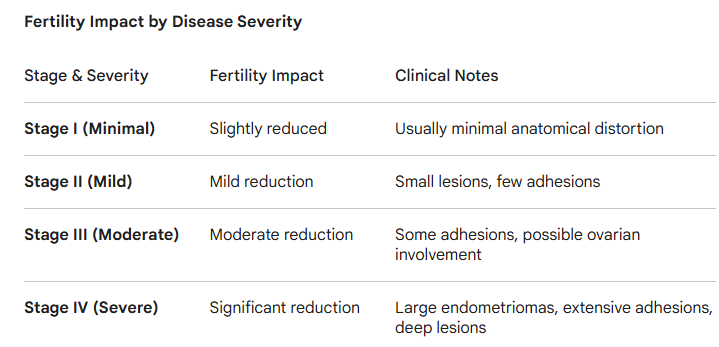
Key Point: Even mild endometriosis can affect fertility due to inflammation and immune factors, while severe disease also adds mechanical obstruction.
3. How Endometriosis Fertility is Managed
Surgical treatment
Laparoscopic excision of lesions and adhesions can improve fertility, especially in moderate to severe disease
Care must be taken to preserve ovarian tissue
Medical treatment
Hormonal therapy does not improve fertility; it suppresses ovulation temporarily
Assisted Reproductive Technologies (ART)
IVF (in vitro fertilization) is often effective if surgery is not enough or fertility needs are urgent
IVF bypasses tubal obstruction and some inflammatory effects
Lifestyle and supportive therapy
Pelvic physical therapy, diet, and pain management can improve overall reproductive health but do not directly cure infertility
💡 Key Takeaways
Endometriosis can reduce fertility through anatomical distortion, inflammation, hormonal changes, and immune effects.
Fertility impact depends on stage and location of disease.
Surgery and IVF are the main approaches to improve pregnancy chances.
Early diagnosis and specialist care are important to optimize fertility outcomes.